01
Fragmented Dealer Interactions
02
Programs Without ROI Visibility
03
No Live Demand
Intelligence
04
Manual Operational Workflows

WITHOUT TECHNOLOGY
WITH AI & AUTOMATIONS

Single portal: orders, claims, inventory, scorecards in one place

Real-time ROI dashboard with dealer-level sales attribution
Warranty claims resolved manually; 2 to 4 week turnaround
Co-op funds validated by hand; 4-6% error rate on claims
OCR proof validation with auto-approval for eligible claims
Inventory levels set on intuition; 20-30% excess stock typical
AI demand forecasting aligned to live dealer sell-through data
Centralized contract engine with automated alerts and renewals
01
Digital Dealer Portal & AI
One unified environment for orders, inventory, claims, programs, and scorecards, with AI resolving 65% of dealer queries automatically in under 3 seconds, 24/7.
Commercial Intelligence Platform
Program ROI engine, dealer performance scorecards, regional demand forecasting, and competitive intelligence, connecting spend to outcomes in real time.
02
Operational Automation
Rules-based processing across co-op claims, warranty adjudication, contract lifecycle, and finance workflows, eliminating manual validation at scale.
03
Queries auto-resolved by AI
65%
Average AI response time
< 3 sec
Always-on availability
24/7
Program participation uplift
+20%
Program ROI & Spend Attribution
Dealer Performance Scorecards
Incentive Participation Tracking
Regional Demand Forecasting
Competitive Intelligence Hub
ANALYTICS PILLARS

Computer Market Research, "Co-op/MDF Management: The 2026 Guide to Automating Channel Marketing Funds" (2026). Industry benchmarks indicate a 4 to 6% error rate in manual co-op/MDF processing from duplicate claims and miscalculated accruals.
Borrell Associates, cited in Sprout Loud, "The Billion Dollar Shift in Co-Op Marketing Spend"; Power Chord, "Local Co-Op Advertising Programs: Why Are Billions Left Unspent Every Year?" (2024).
Arda, "7 Inventory Reduction Strategies" (2025); WSI citing Worldmetrics.org 2024 Report: most manufacturers carry 20 to 30% of working capital in excess inventory.
Arda (2025); Four Kites, "Inventory Carrying Cost: What It Is, How to Calculate It and How to Reduce It": carrying costs run 20 to 35% of inventory value per year.
April 2026 │ Compact & Utility Equipment │ Industry Insights
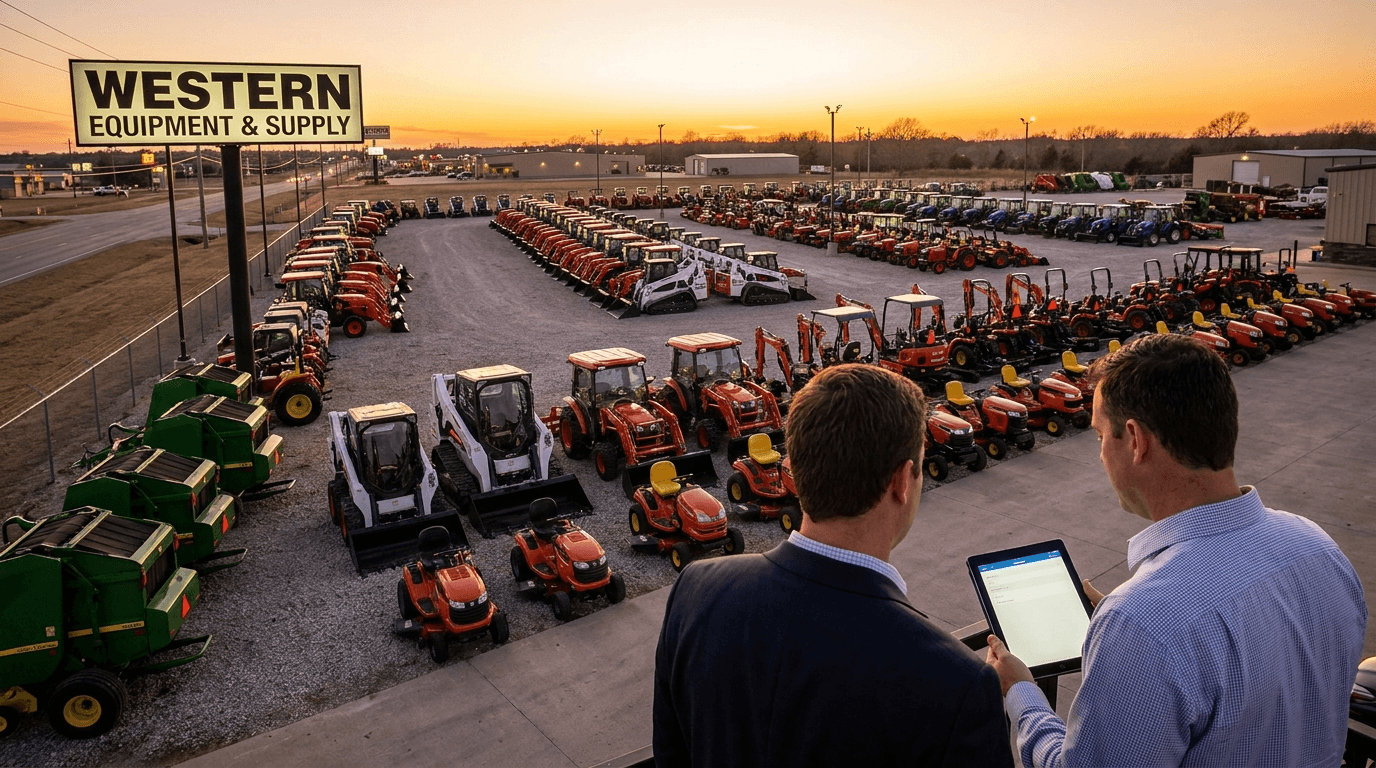
The race to scale is no longer won on product or price. It is won on the quality of data, the intelligence of commercial systems, and the speed of dealer-facing execution.
The Four Gaps Holding Dealer Networks Back
Without Technology VS. With AI & Automation
The Solution: Three Connected Layers on One Foundation
Layer 1: The AI-Powered Dealer Portal
Layer 2: The Commercial Intelligence Platform
How to Build It: Sequence and Logic
The Window Is Open, But Not Permanently
The Data Foundation That Makes It All Work
What This Delivers: Commercial Outcomes
Layer 3: Operational Automation Across Key Workflows
The Cost of Staying Manual
Across compact and utility equipment manufacturers at growth inflection points, the same four structural constraints surface. Each is solvable, but only with the right technology and process architecture.
Across compact and utility equipment businesses, the pattern is consistent: capable commercial teams held back by infrastructure that was never designed for the scale they are now trying to operate at. The gap is not effort; it is the absence of the right systems.
Warranty cycles that take weeks erode dealer confidence, and mis-forecast inventory drags margin every cycle. The table below shows what each pressure point looks like today, and what changes when AI and automation replace manual processes.
Addressing these gaps requires a connected architecture, not separate tools bolted onto separate problems. Three capability layers sit on top of a common data foundation, each feeding the next.
A unified portal replaces fragmented touchpoints with a single environment where dealers place orders, track stock, submit claims, enroll in programs, and monitor their own performance, all driven by live operational data. Embedded AI resolves routine dealer queries automatically, checking live inventory, retrieving program terms, and completing transactions without human intervention.
A Program Intelligence and ROI Engine connects incentive spend to dealer-level sales outcomes in real time, answering which programs generate incremental retail sales versus simply rewarding volume that would have happened regardless.
Automated governance layers add rules-based eligibility checks, auto-approval thresholds, and exception escalation. Routine transactions clear without human review while exceptions get faster resolution. Dealer-level scorecards surface performance gaps before they become attrition risks.
The solution is not deployed all at once; the sequence matters. Each layer depends on the one before it. Getting the order right is the difference between a transformation that compounds in value and one that delivers expensive tools on unreliable foundations.
The leading brands in compact and utility equipment are already investing in integrated commercial intelligence, AI-assisted dealer support, and automated operational workflows. The gap in execution capability translates directly into a gap in market share. Once dealer relationships and regional positions are conceded to a better-equipped competitor, recovering them requires disproportionate investment.
The market opportunity in compact and utility equipment is real and expanding. The question is not whether manufacturers need to make this transition; it is whether they are ready to execute it with the right sequence, the right accountability, and a clear line of sight to commercial outcomes at every stage.
All three layers depend on a single prerequisite: a governed enterprise data foundation integrating dealer, sales, inventory, and warranty data into one consistent source of truth. The most common transformation failure is building visible technology on top of unresolved data fragmentation. The result is impressive-looking tools with unreliable outputs that erode team confidence within months.
Compact and utility equipment manufacturers that have executed this integrated model consistently achieve the following commercial outcomes:
Manual processing is the most visible drag on commercial execution speed in compact equipment distribution. Four automation areas deliver the most immediate operational impact:
OCR validation, auto-approvals, real-time fund tracking.
Co-op Claims
Telematics pre-checks, AI validation, same-day adjudication.
Warranty & Claims
Centralized repository, auto-renewal alerts, pricing guardrails.
Contract Lifecycle
Automated GL & AR, credit-note flows, real-time close.
01
Dealer & Partner
Data Integration
02
Standardized KPIs &
Definitions
03
Data Pipelines & API Connections
04
Governed Data Warehouse
05
Continuous Data Quality Management
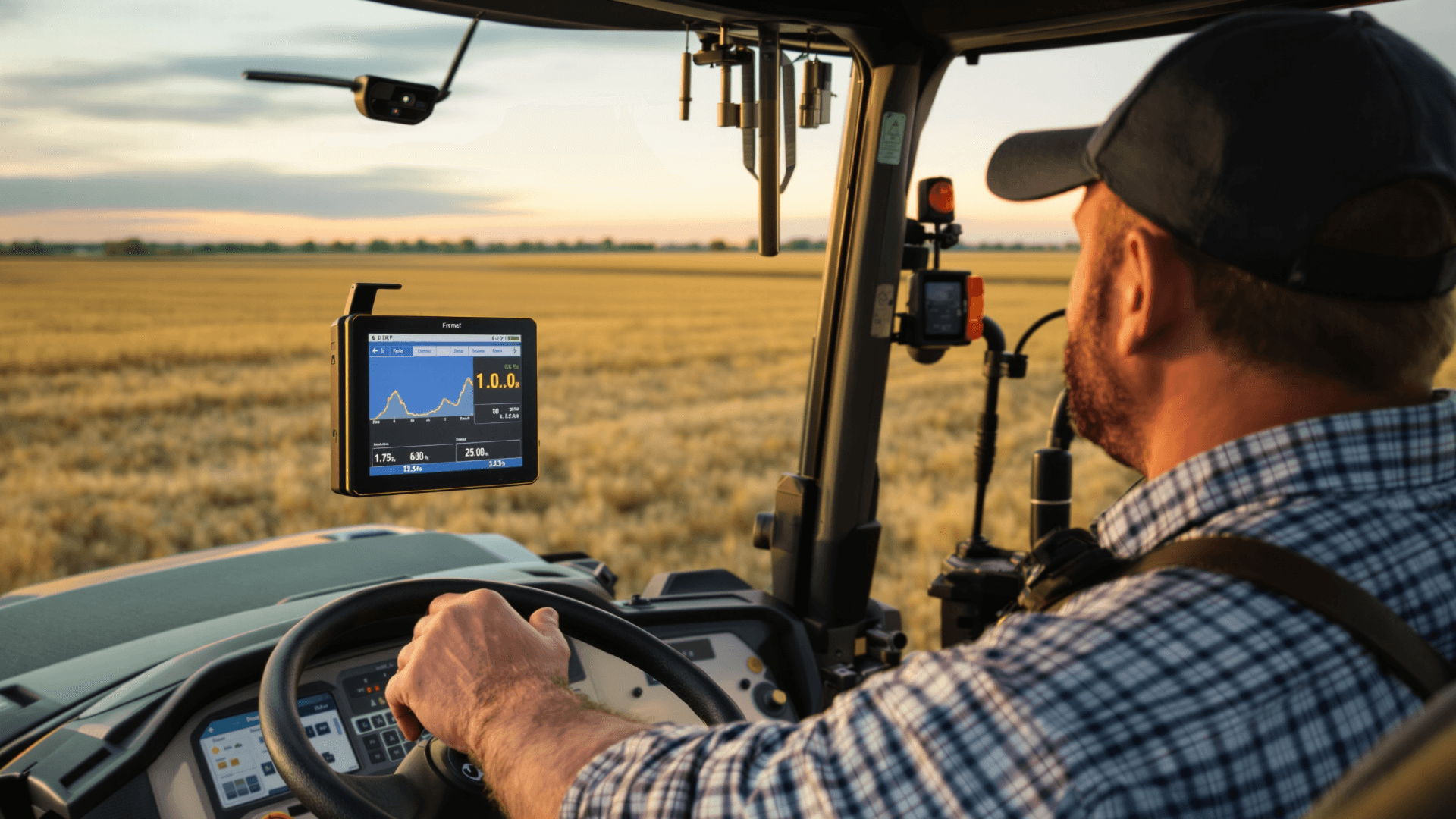
Individual improvements are modest in isolation. Combined, improved dealer engagement, optimized commercial spend, faster execution, and data-driven network management compound to a 3 to 6x commercial return on the transformation investment.
01
Build the Data
Foundation
WHAT: Unify dealer, sales, inventory, and warranty data into a single governed layer with standardized KPIs and governance.
WHY NOW: Nothing else works reliably without this. Analytics on fragmented data produce inconsistent outputs that lose team trust quickly.
02
Deploy the Dealer Portal & AI
WHAT: Launch the unified portal with live data feeds and embedded AI support. Activate dealer scorecards and real-time sales visibility.
WHY NOW: Dealers feel the change immediately: friction drops, engagement rises, and the portal generates the behavioral signals the intelligence layer needs.
03
Activate Commercial Intelligence
WHAT: Deploy the ROI Engine, demand forecasting, dealer performance analytics, and competitive monitoring on the live data foundation.
WHY NOW: Clean data flowing and dealer engagement up means decisions previously impossible are now routine: which programs work, where to invest, who needs intervention.
04
Automate the Operational Layer
WHAT: Replace manual co-op, warranty, and contract workflows with rules-based, telematics-integrated automation.
WHY NOW: Automation calibrated against real performance data closes the loop. Manual effort concentrates only where human judgment genuinely adds value.
Dealer relationships established with a competitor are hard to dislodge. Market positions conceded in high-growth regions cost far more to recover than they would have cost to hold. The cost of delay compounds every season.
The compact and utility equipment market in North America crossed $28 billion in 2025. Demand is diversifying: lifestyle property owners, specialty horticulture, commercial operators, and municipal services are joining traditional agricultural buyers. For most manufacturers in this space, the market opportunity is not the constraint. The constraint is the operating model.
Manufacturers with strong product lines and growing dealer networks consistently underperform their growth potential because the commercial infrastructure supporting those networks was not built for scale. The gap between ambition and execution is almost always a systems and data gap, and closing it requires a deliberate shift toward AI-driven intelligence, technology integration, and end-to-end process automation.